Equal Or Not Equal Worksheets For Preschoolers
When it comes to teaching preschoolers about concepts like equality and inequality, using engaging resources is key. Equal or Not Equal Worksheets For Preschoolers provide an excellent way to introduce these foundational math concepts. These worksheets are designed to help young learners recognize and understand the difference between equal and unequal sets, a skill that lays the groundwork for future math learning.
What Are Equal or Not Equal Worksheets?
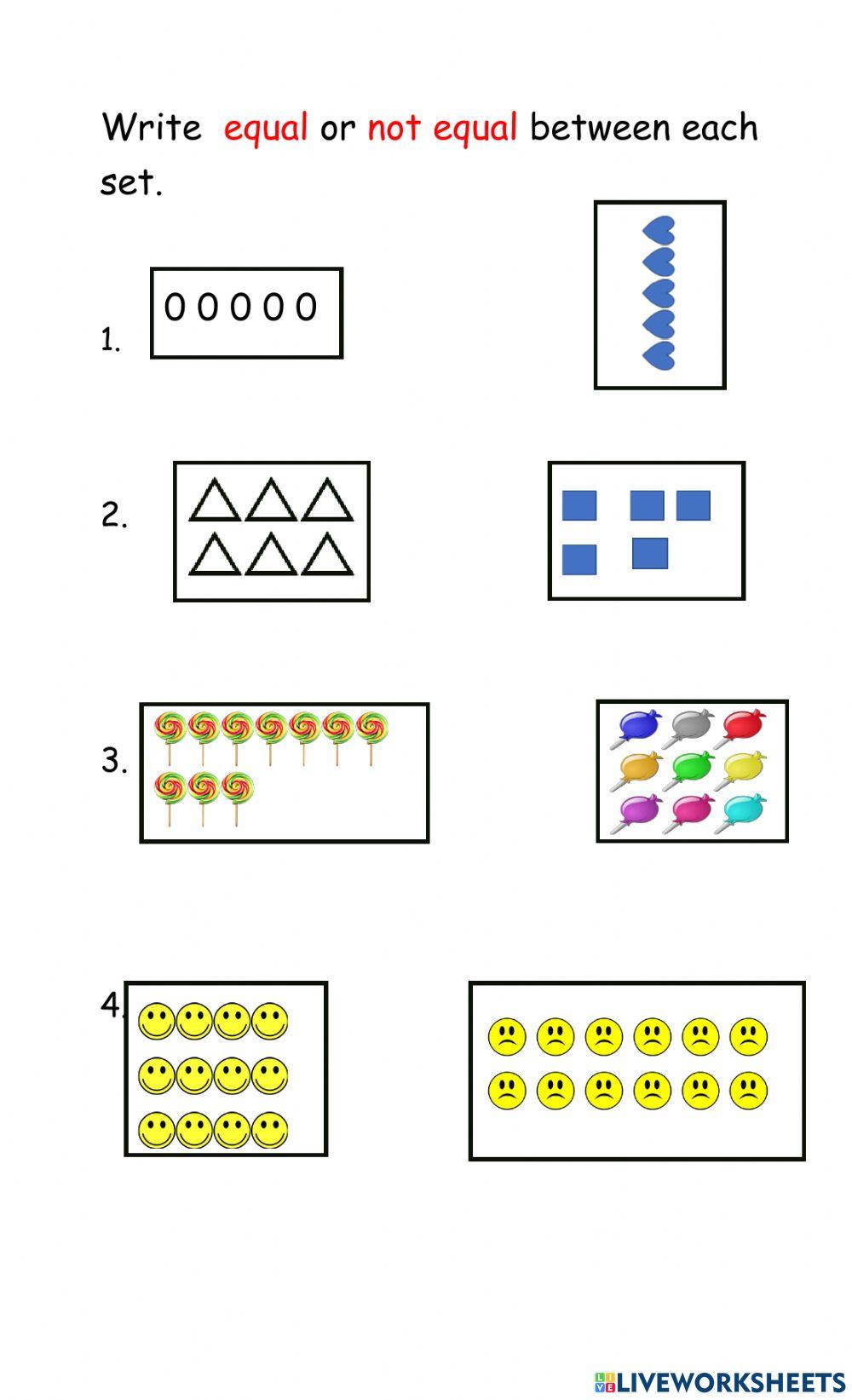
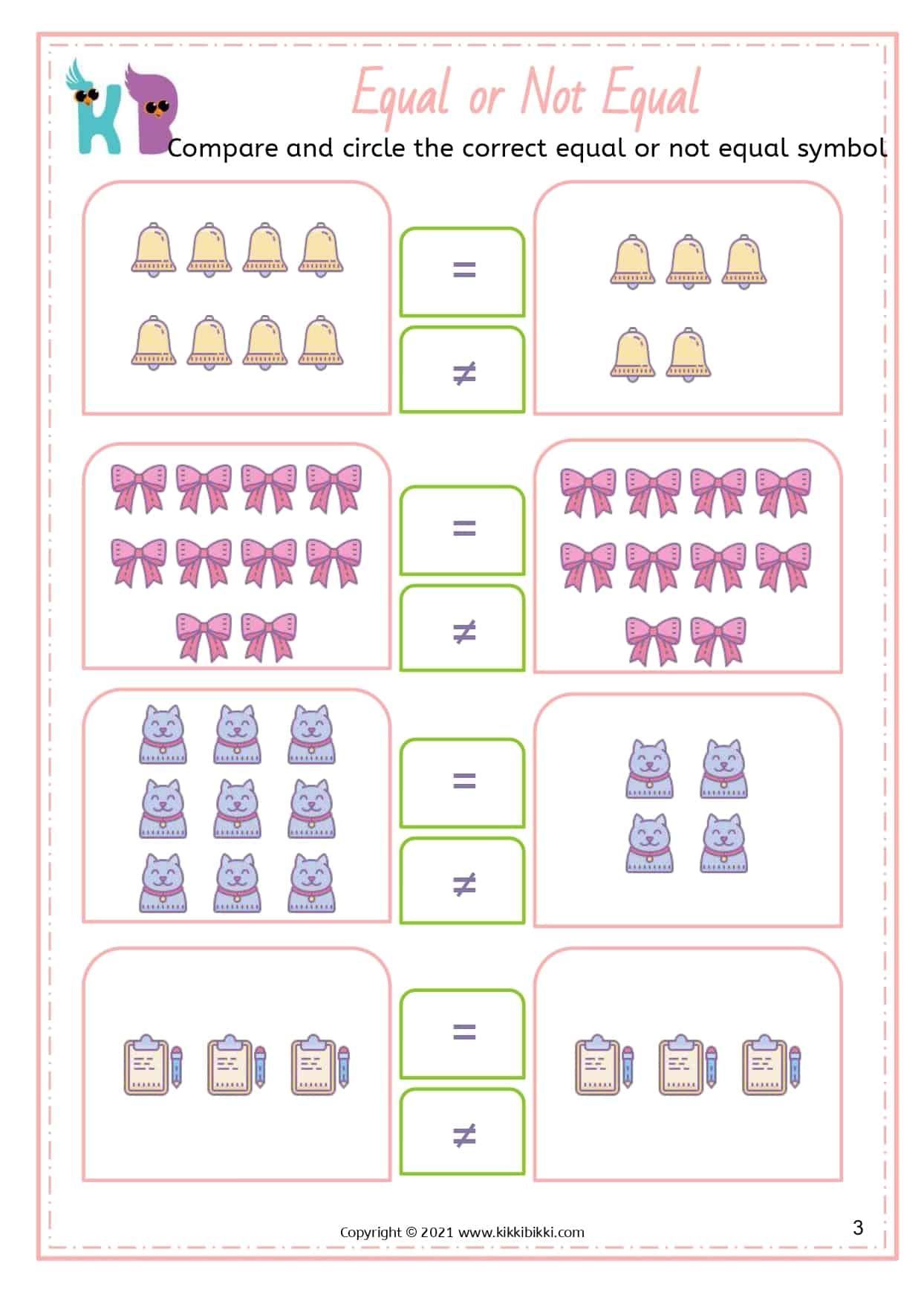
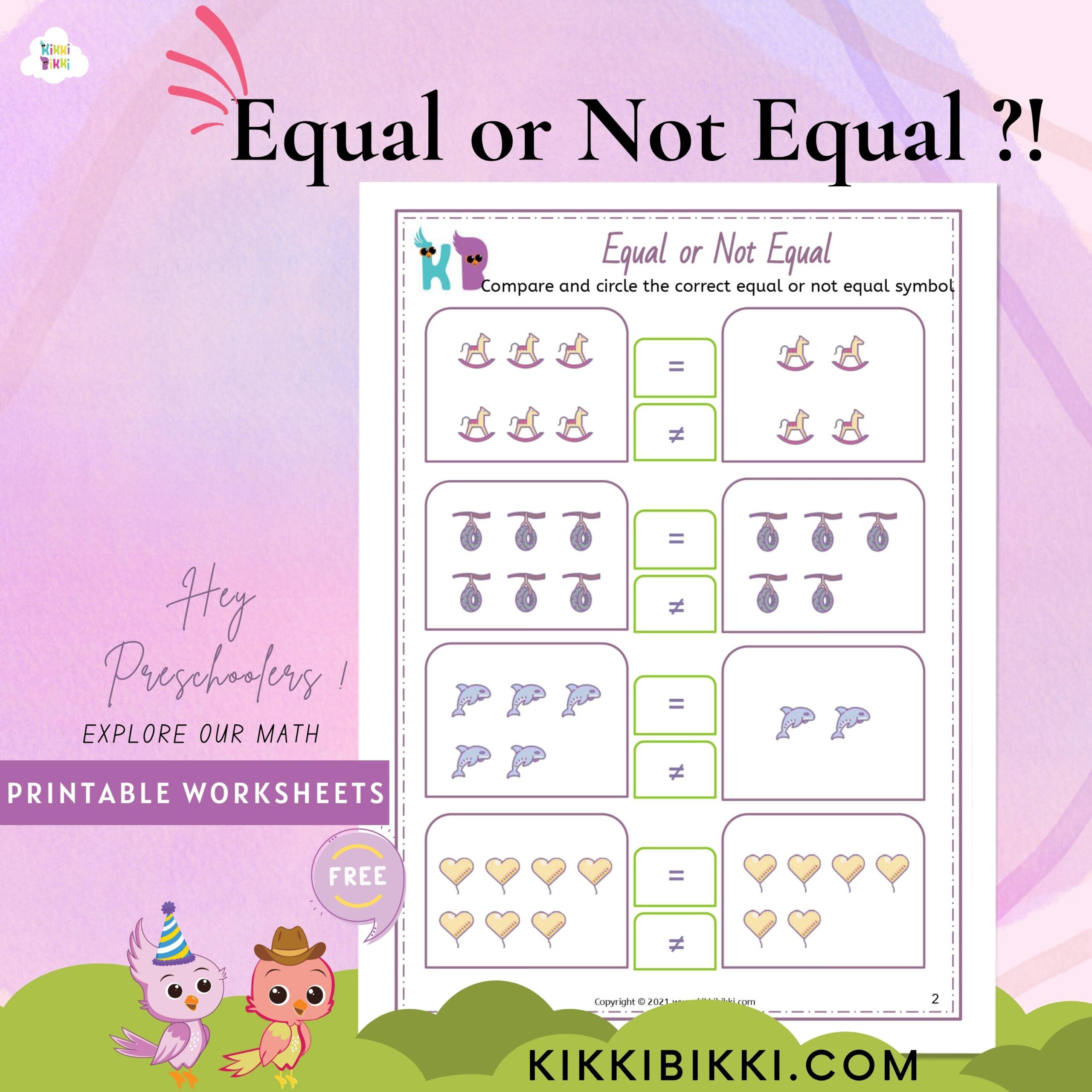
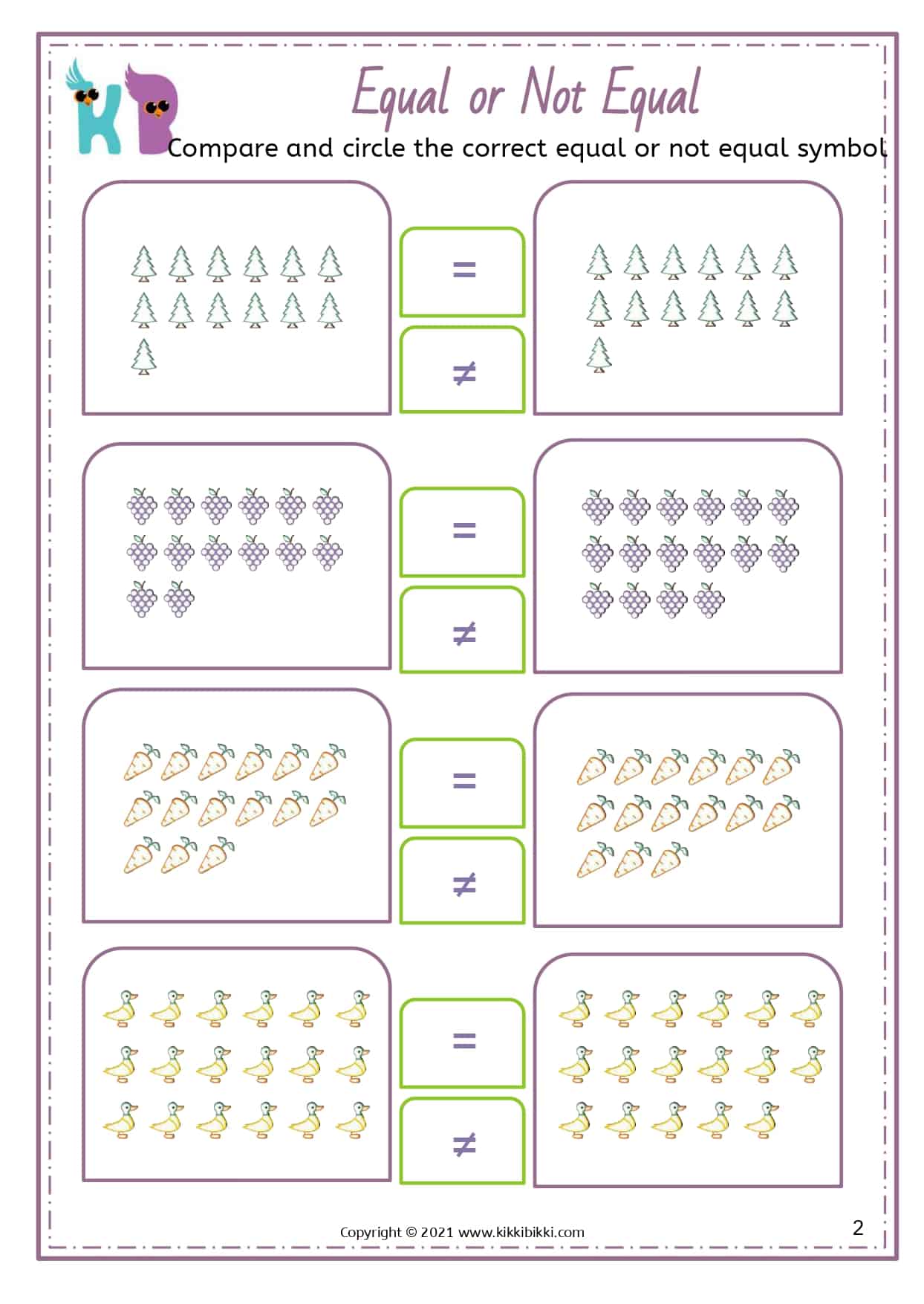
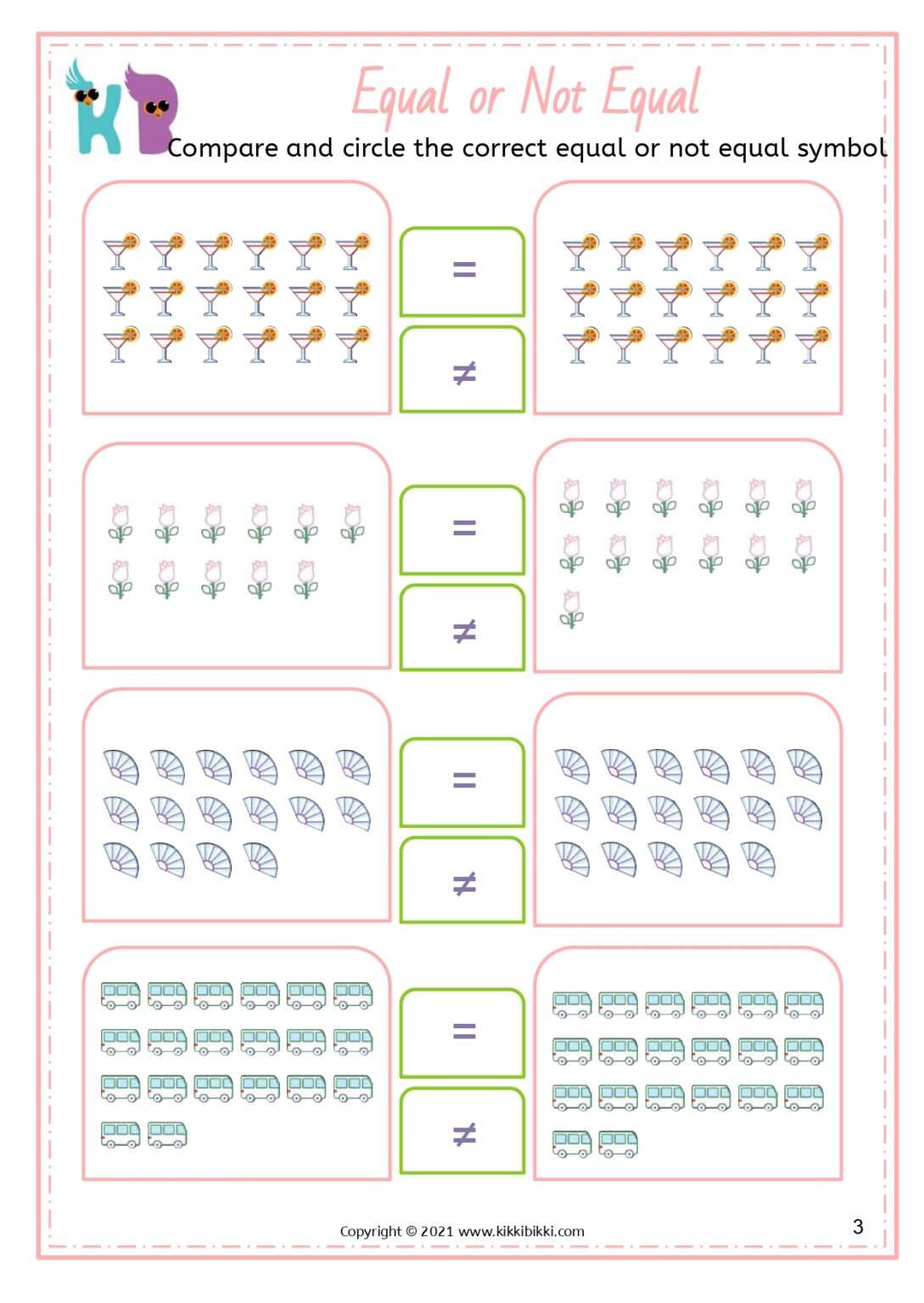
Equal or Not Equal Worksheets are educational tools that present various sets of objects, numbers, or shapes. The objective is simple: children are asked to determine whether the sets are equal or not. This activity encourages critical thinking and helps preschoolers develop their analytical skills.
Typically, these worksheets include exercises where children will circle the correct answer, draw lines between matching elements, or color in specific areas to indicate their answer. They might find pictures of apples, stars, or other fun shapes to make the activity more visually appealing and engaging.
How to Use Equal or Not Equal Worksheets
Using these worksheets effectively involves a few simple steps:
- Download and Print: First, find a reliable source to download the Equal or Not Equal Worksheets. Ensure they are in a PDF format for easy printing. Standard letter size paper (8.5 x 11 inches) works best for home printers.
- Gather Supplies: You’ll need crayons or colored pencils for some activities, especially if children will be coloring in their answers. A ruler can also help younger kids draw straight lines between equal sets.
- Explain the Concepts: Before diving into the worksheets, take some time to explain what “equal” and “not equal” mean. Use everyday examples, like comparing two apples to one apple, to illustrate the concept.
- Work Together: Sit with your child as they complete the worksheets. Encourage them to explain their thought process as they determine if the sets are equal or not. This conversation can help strengthen their understanding.
- Review Answers: After they’ve completed the worksheets, go over the answers together. Discuss any mistakes they made to reinforce learning.
Benefits of Using Worksheets for Teaching
Worksheets provide several benefits when teaching preschoolers about equality and inequality:
- Visual Learning: Children often learn better with visual aids. The graphics on these worksheets can help them grasp the concept of equality more clearly.
- Hands-On Practice: Worksheets allow for hands-on practice that can reinforce learning. They can write, color, and mark their answers, making the learning process interactive.
- Self-Paced Learning: Kids can work on worksheets at their own pace, allowing them to take their time to think through each problem.
- Parental Involvement: Parents can easily participate in their child’s learning through these activities, fostering a supportive learning environment.
Digital Vs. Print Worksheets
When considering the format of Equal or Not Equal Worksheets, you have two primary choices: digital or print.
Digital Worksheets
Using fillable PDF worksheets is a great option if you want to save on paper. With digital worksheets, children can complete their activities on a tablet or computer. This method has its perks:
- No Printing Required: You can save on ink and paper by using a digital version. This is also a more environmentally friendly option.
- Interactive Features: Some digital worksheets come with interactive elements, such as drag-and-drop functions or instant feedback.
However, keep in mind that not all preschoolers are ready for screen time. You’ll need to monitor their usage and ensure it’s balanced with hands-on activities.
Printed Worksheets
Printing the worksheets has its own set of advantages:
- Tactile Experience: Many children benefit from the tactile experience of writing and coloring by hand. This not only helps with learning concepts but also improves fine motor skills.
- Easier for Younger Kids: For preschoolers, especially those who may not be familiar with technology, print versions are often easier to use.
- Less Distraction: A printed worksheet minimizes distractions that can come from a screen, allowing kids to focus on the task at hand.
Ultimately, the choice between digital and print worksheets will depend on your child’s learning style and your personal preference.
Where to Find Equal or Not Equal Worksheets
There are numerous resources available online where you can find Equal or Not Equal Worksheets for preschoolers. Here are a few trusted sources:
- Educational Websites: Websites such as Education.com and Teachers Pay Teachers offer a variety of worksheets that cater to different learning levels and styles.
- Printable Resources: Many sites focus on providing printable educational resources. Look for ones that offer free downloads to try before you buy.
- Local Libraries: Don’t overlook your local library; many have educational materials and worksheets that can be checked out or accessed online.
When selecting worksheets, ensure they are age-appropriate and cater to your child’s learning needs.
Tips for Effective Learning With Worksheets
To maximize the effectiveness of Equal or Not Equal Worksheets, consider these tips:
- Incorporate Games: Turn the worksheet activity into a game. For example, you can set a timer and see how many problems your child can solve within that time frame.
- Use Real-Life Examples: Relate the worksheets to real-life situations. Count toys, snacks, or other items around the house to reinforce the concepts.
- Encourage Discussion: After completing the worksheets, ask open-ended questions about what they learned. This helps solidify their understanding and encourages critical thinking.
- Make it Fun: Use stickers or small rewards when your child completes a worksheet. This can motivate them to engage with the material more enthusiastically.
Equal or Not Equal Worksheets For Preschoolers are not just educational tools; they are avenues for children to explore foundational math concepts in a fun and engaging way. By using these worksheets effectively, you can foster a love for learning in your child and prepare them for future mathematical challenges.
Equal Or Not Equal Worksheets For Preschoolers Gallery