Day And Night Activities Worksheet For Preschool
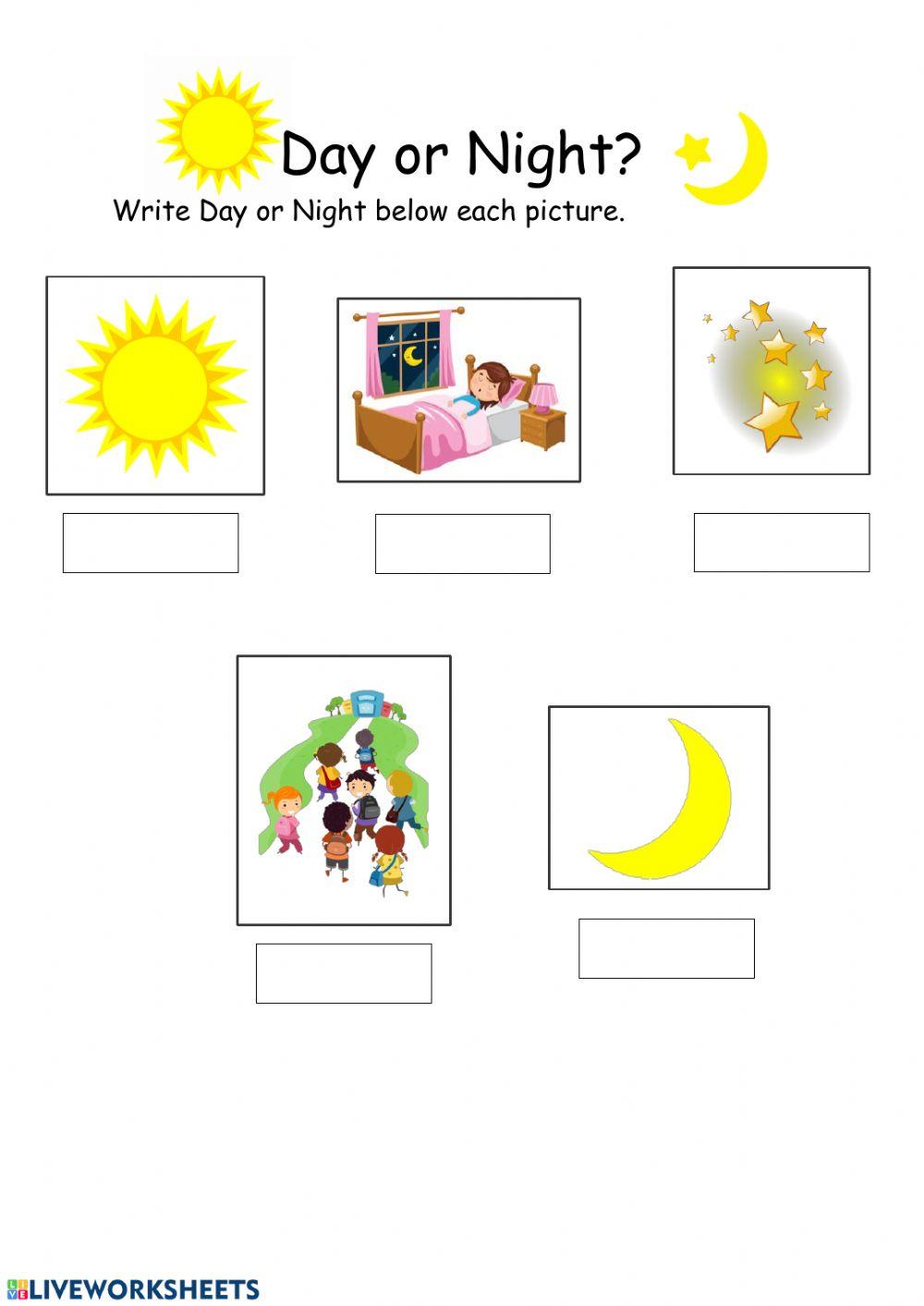
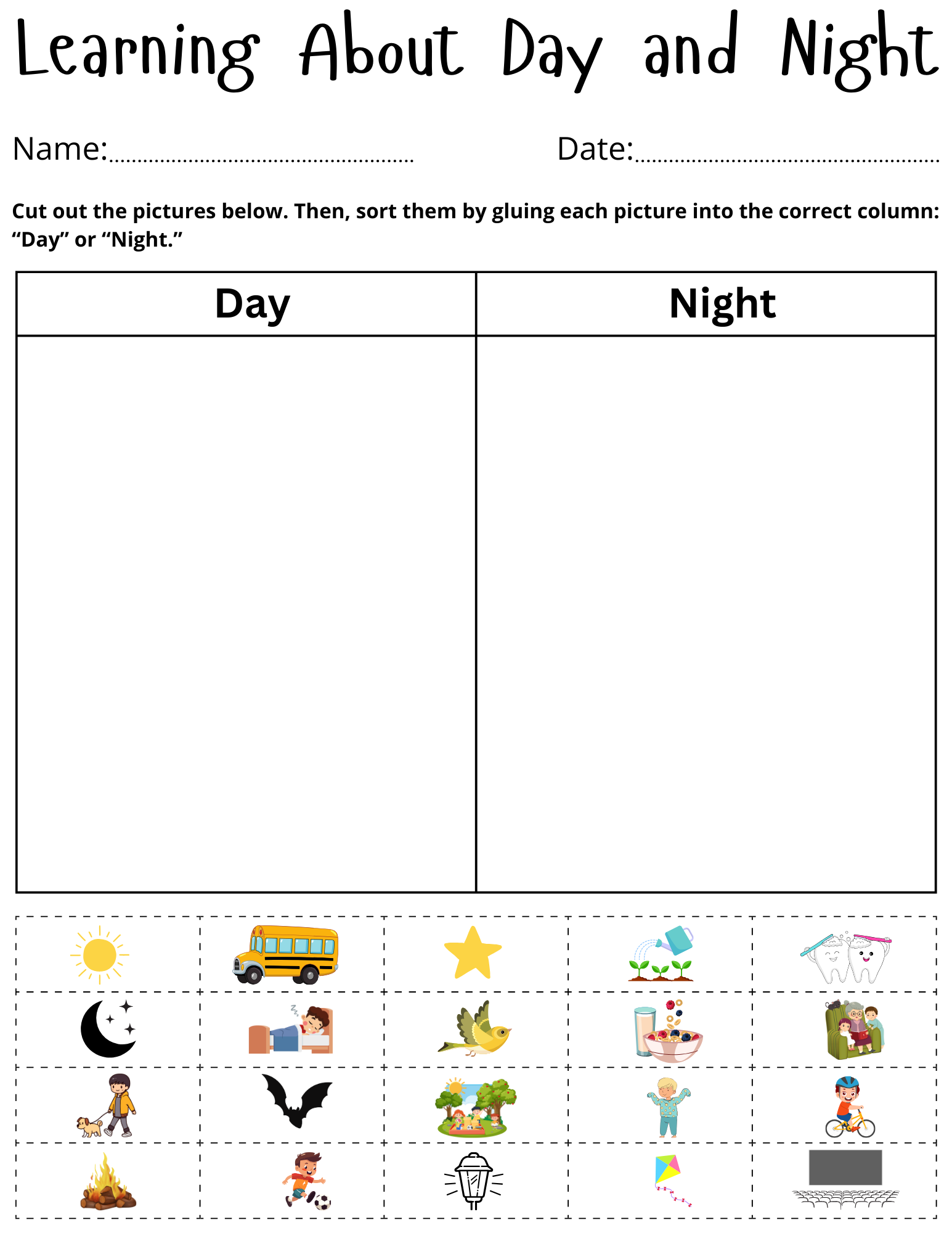
Using a Day And Night Activities Worksheet For Preschool can be a fantastic way to introduce young children to the concepts of time, routines, and the differences between day and night. This worksheet typically includes a variety of engaging activities designed to help preschoolers understand which activities are associated with daytime and which are part of nighttime routines.
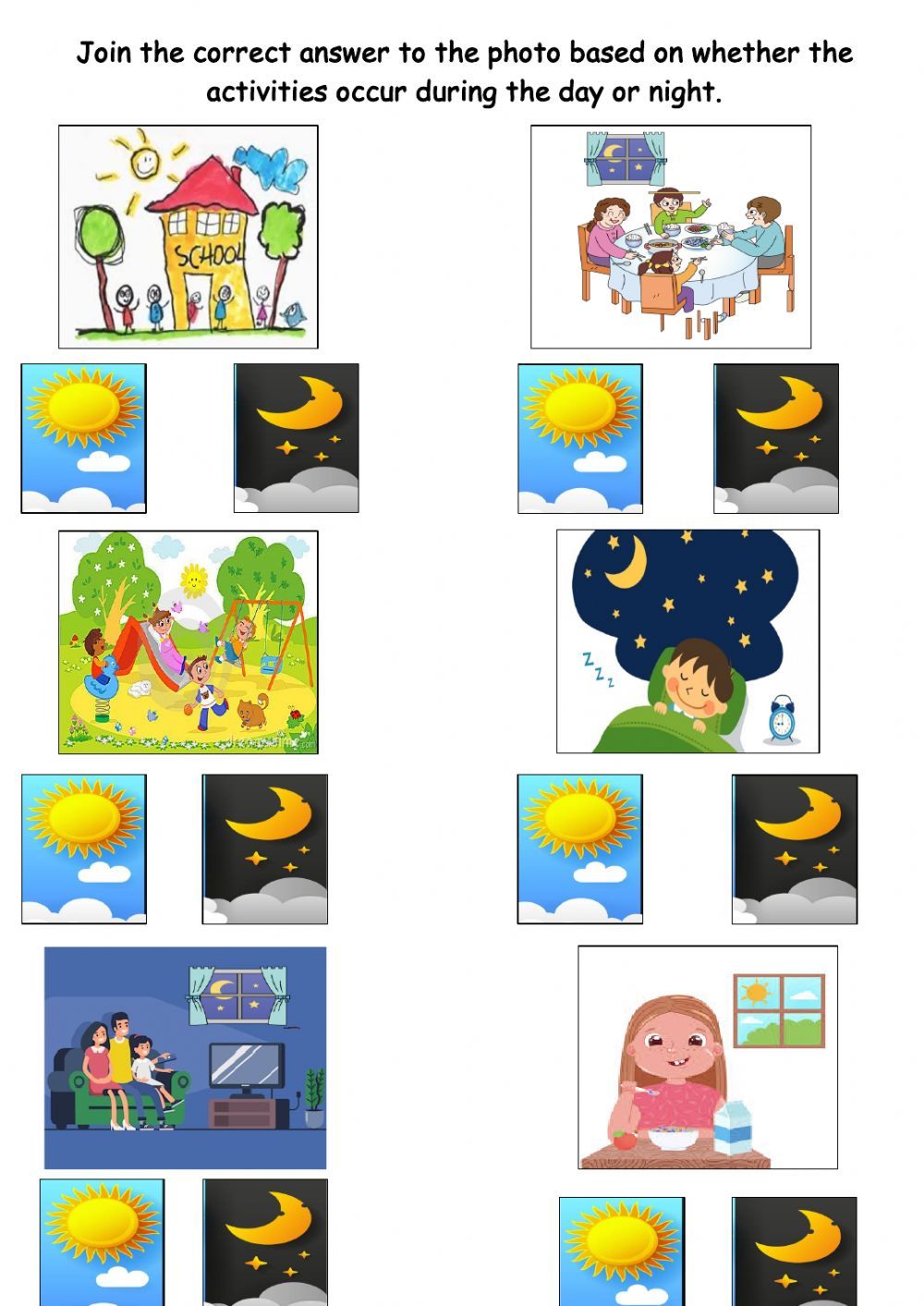
Why Use a Day And Night Activities Worksheet?
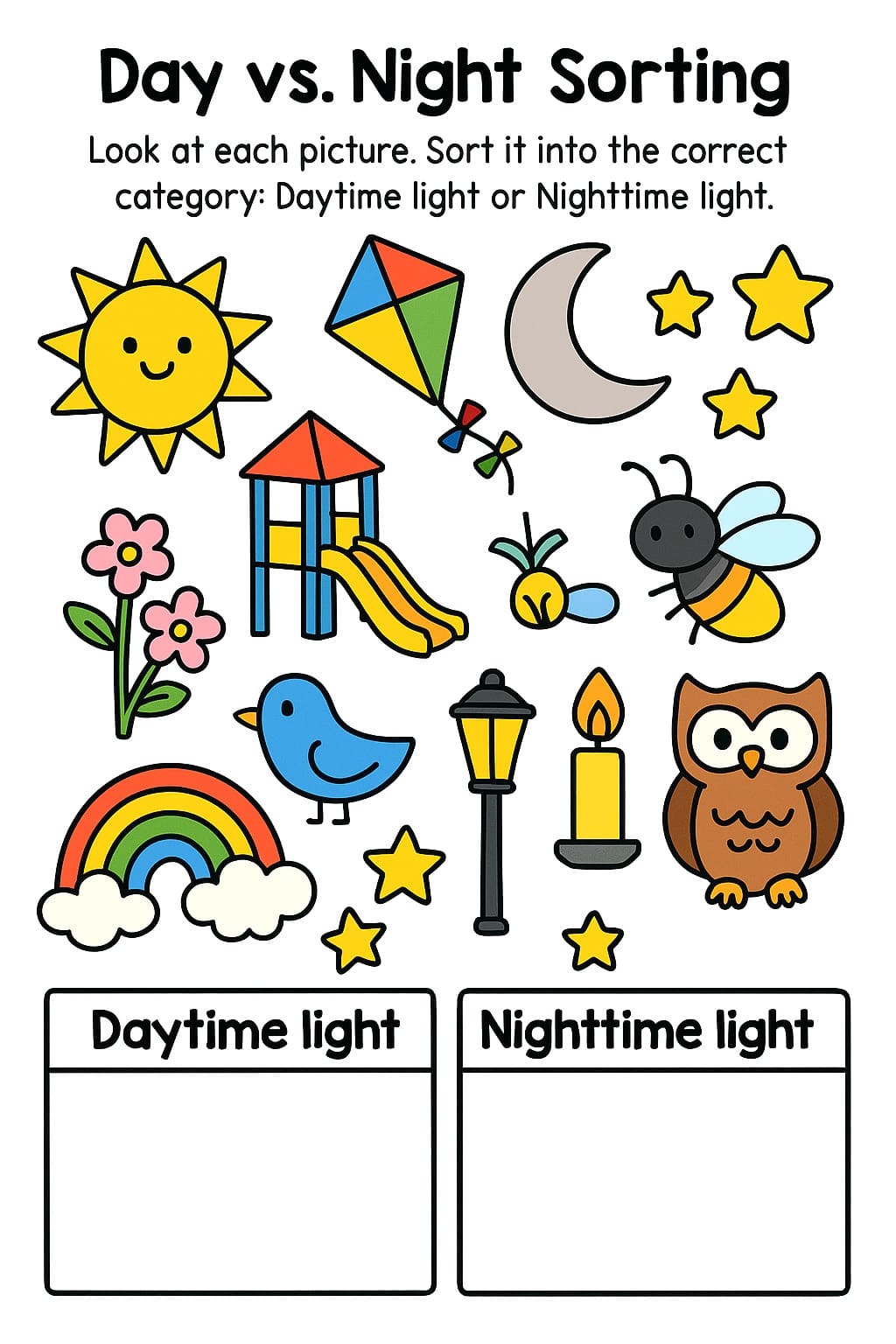
The primary purpose of a Day And Night Activities Worksheet is to provide a structured yet fun way for preschoolers to learn about their daily routines. This worksheet can serve multiple educational purposes:
- Understanding Time Concepts: Children learn to differentiate between day and night and the activities associated with each.
- Language Development: As children discuss the activities, they enhance their vocabulary and communication skills.
- Cognitive Skills: Sorting activities into day or night helps develop critical thinking and categorization abilities.
When introducing this worksheet to your child, it’s essential to create a positive and encouraging environment. Kids thrive when they feel supported, so take the time to explain the purpose of the worksheet and how they can complete it.
How to Set Up the Day And Night Activities Worksheet
Before diving into the activities, setting up the worksheet properly is crucial for maximizing its effectiveness. Here’s how you can prepare it:
- Download the Worksheet: Make sure you have the correct file format, usually a PDF, which is easy to print without losing quality.
- Choose the Right Paper: For durability, consider printing the worksheet on cardstock. This is especially useful if your child will be coloring or using stickers.
- Gather Supplies: Have crayons, markers, or stickers handy for your child to use while completing the worksheet. You may also want to provide a clipboard or flat surface to work on.
Filling Out the Worksheet
The Day And Night Activities Worksheet generally consists of images or words representing various activities. Here’s how to fill it out effectively:
- Identify Activities: Look at each image or word on the worksheet. Discuss what the activity is and why it belongs in either the day or night category.
- Categorize: Help your child sort the activities. You can create two columns or sections on the worksheet: one for day activities and one for night activities. This visual aid reinforces their understanding.
- Color and Decorate: Encourage your child to color the images or add stickers. This not only makes the activity more engaging but also supports fine motor skills development.
Incorporating the Worksheet Into Daily Routines
To maximize the learning experience, integrate the Day And Night Activities Worksheet into your child’s daily routine. Here are some practical ways to do that:
- Morning Discussions: Each morning, ask your child what activities they plan to do during the day. Use the worksheet to reinforce these ideas.
- Evening Reflections: At bedtime, revisit the worksheet and talk about the day’s activities. This reinforces the concept of time and helps children understand the flow of their daily schedule.
- Play and Learn: Use the worksheet as a springboard for additional activities. For example, play games that involve mimicking day and night activities or create a daily schedule together.
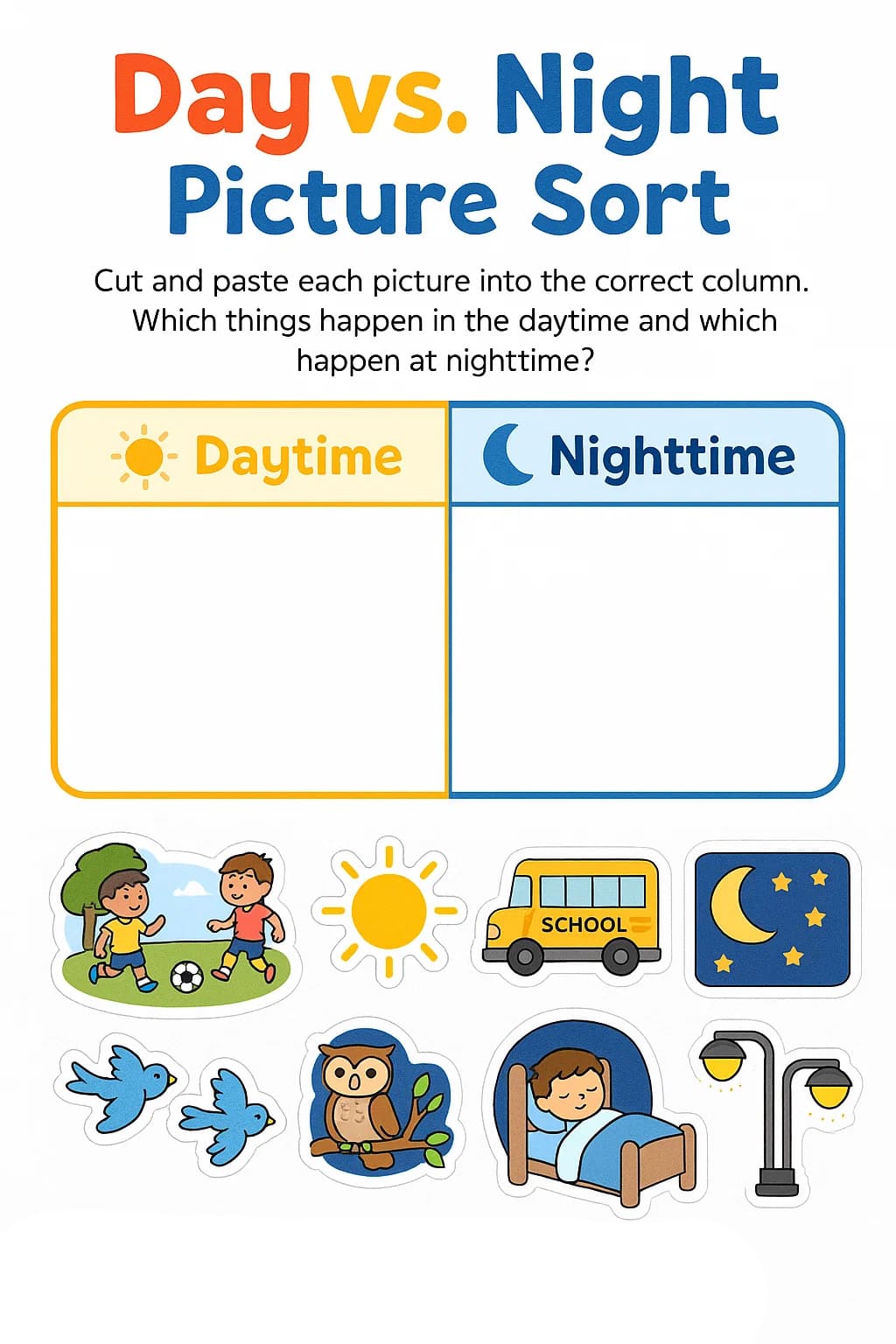
Additional Resources and Variations
While the Day And Night Activities Worksheet is a fantastic starting point, consider supplementing it with other resources to enhance your child’s learning experience:
- Storybooks: Read picture books that focus on day and night themes, like “Goodnight Moon” or “The Very Hungry Caterpillar.” These stories can help reinforce the concepts introduced in the worksheet.
- Visual Aids: Create a chart that outlines daily routines, helping your child visualize when specific activities occur.
- Interactive Activities: Engage in role-playing games where your child acts out different activities for day and night. This kinesthetic approach can solidify their understanding.
Day And Night Activities Worksheet For Preschool Gallery