Demonstrative Pronoun Worksheet For Preschool
Understanding demonstrative pronouns is essential for preschoolers as they begin to form sentences and express themselves. A Demonstrative Pronoun Worksheet For Preschool can serve as a fantastic resource to help young children grasp this concept. This worksheet is designed to make learning interactive and fun, allowing children to identify and use pronouns like “this,” “that,” “these,” and “those” in context.
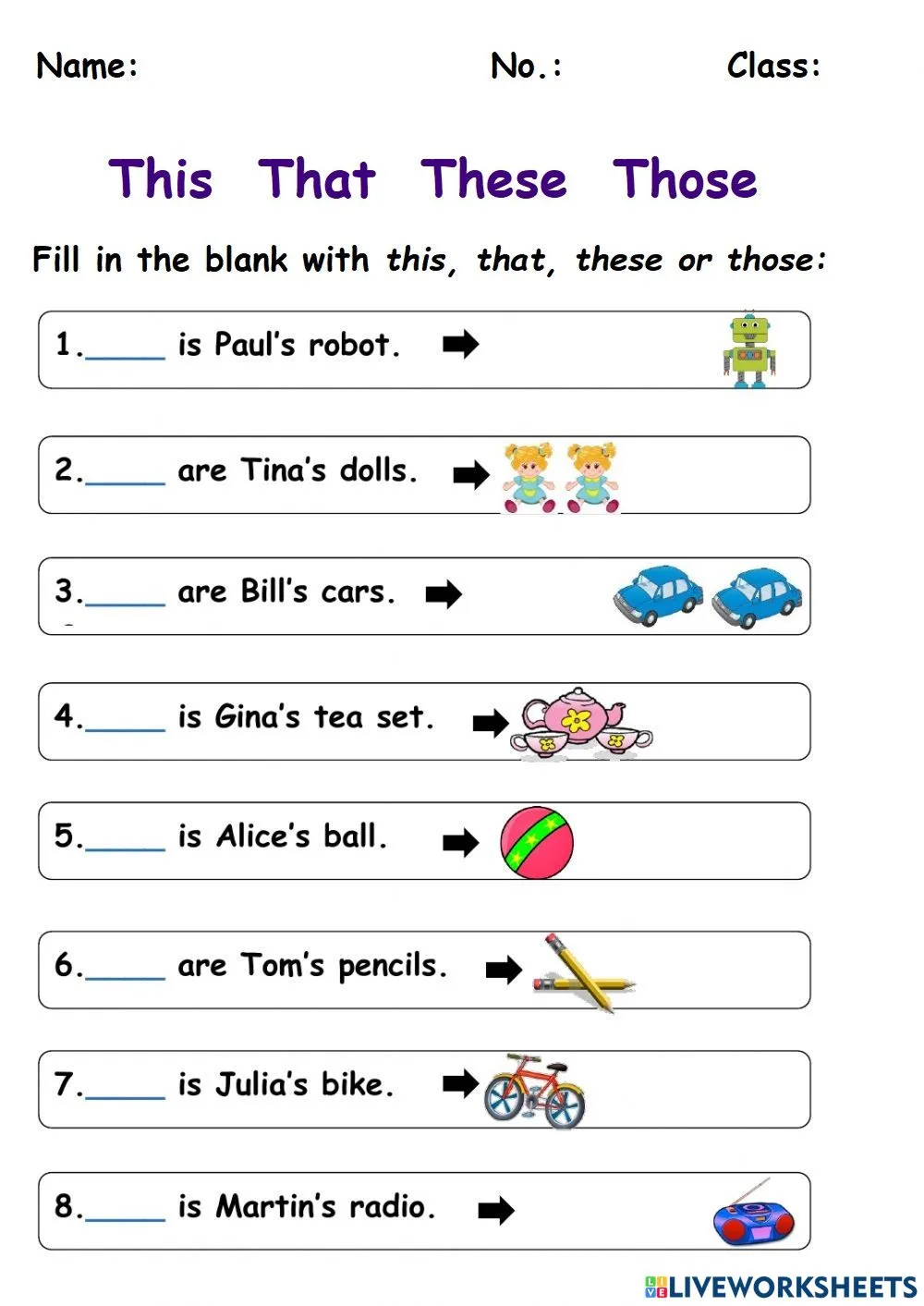
What Are Demonstrative Pronouns?
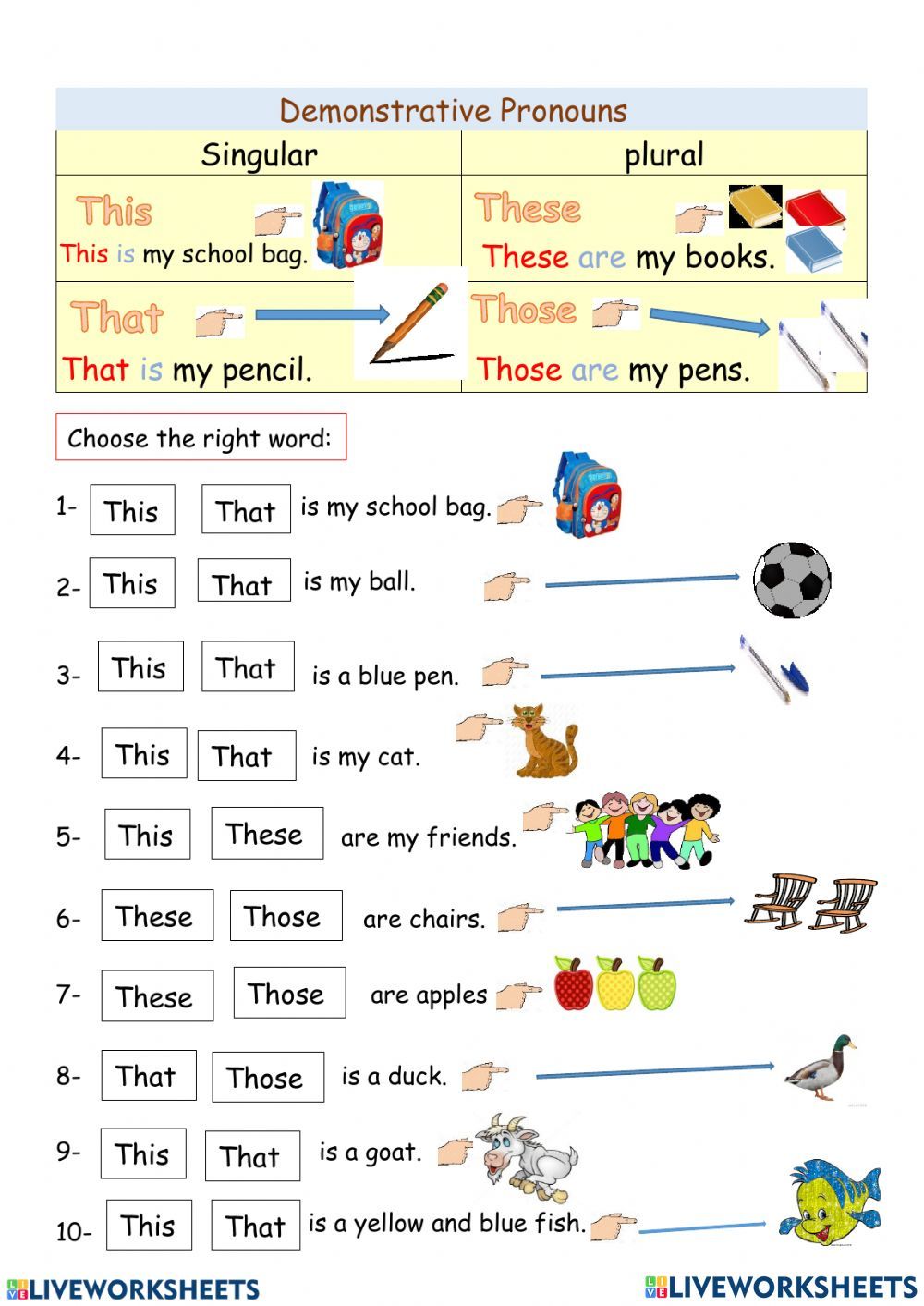
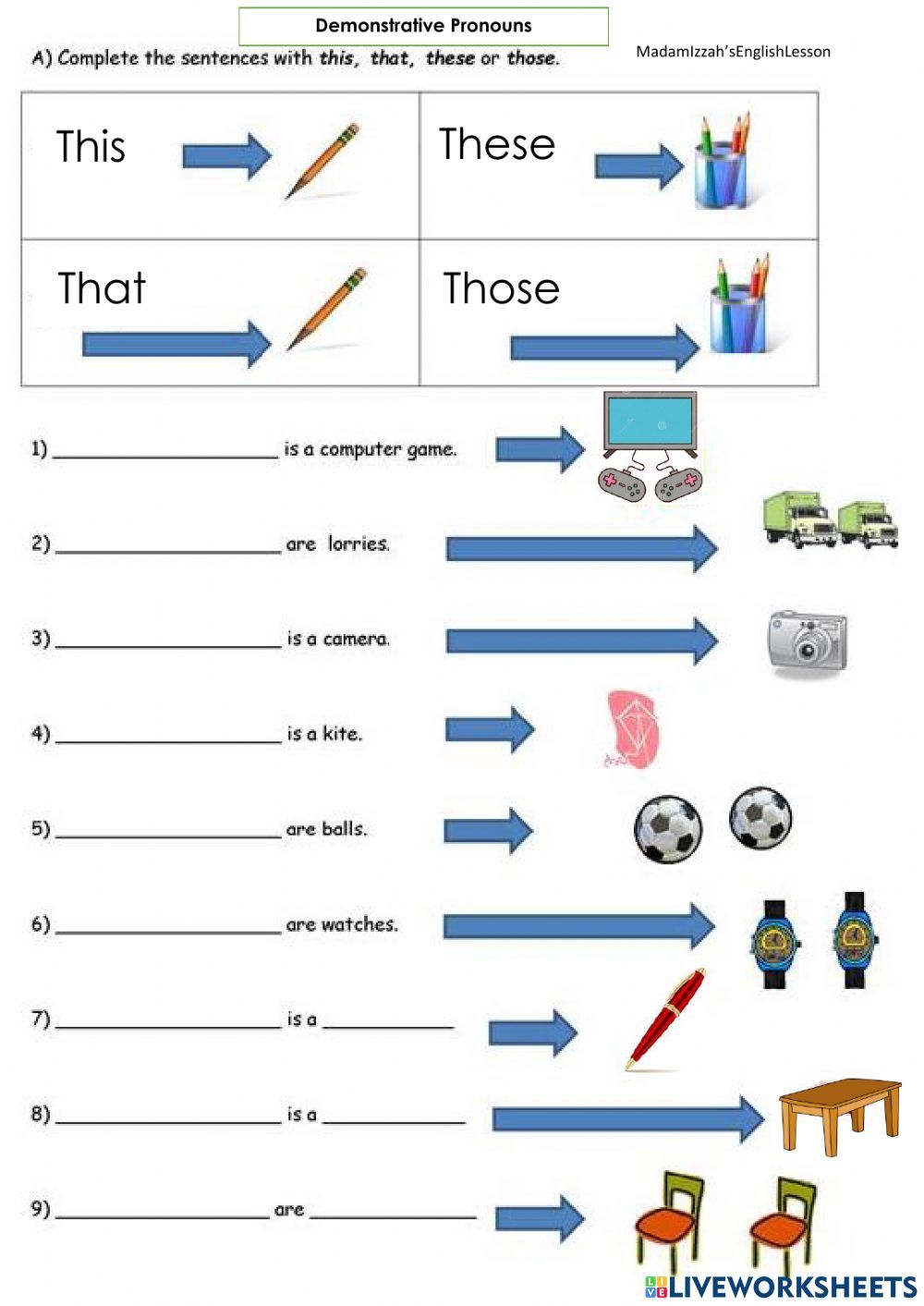
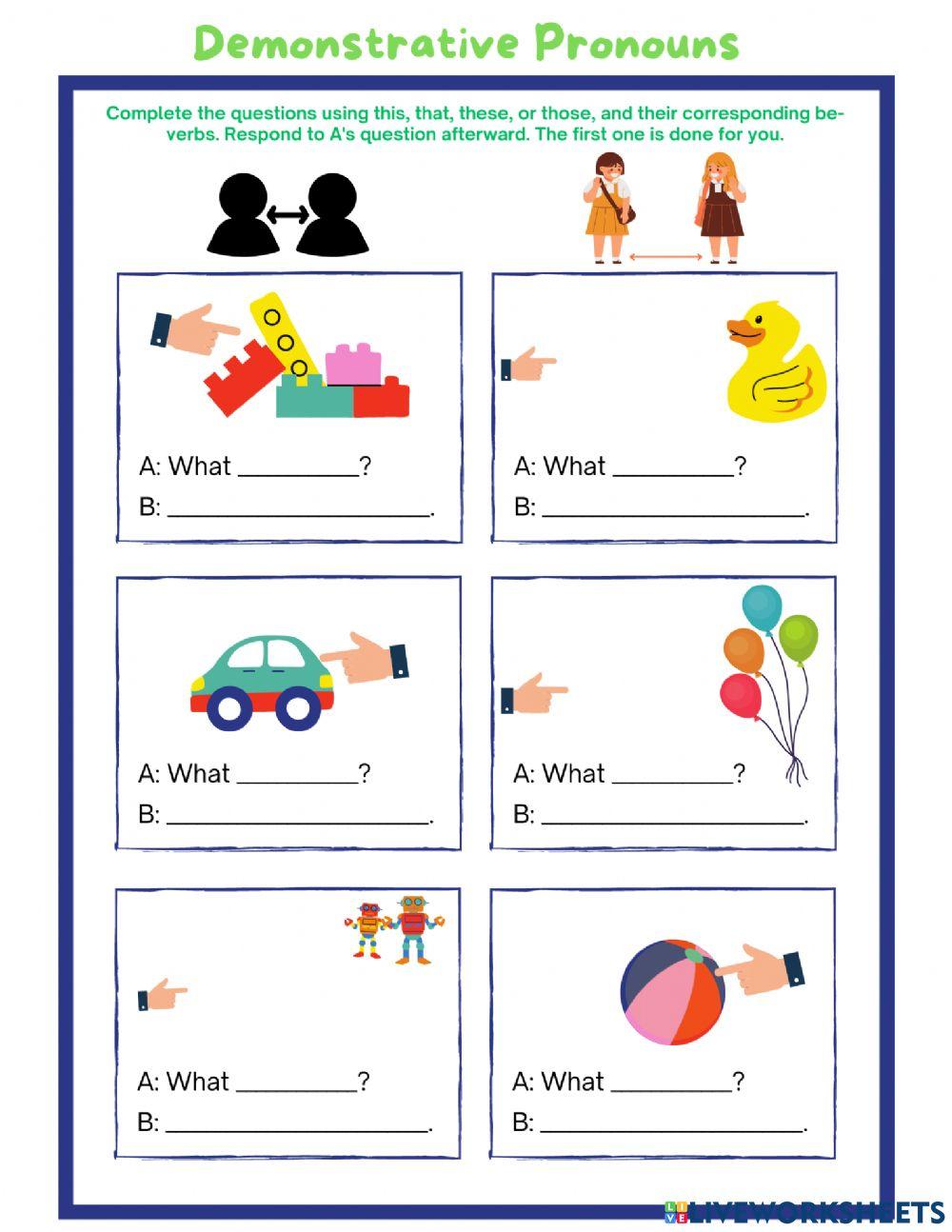
Demonstrative pronouns are words that point to specific things or people. They help children describe their surroundings and express their thoughts clearly. For preschoolers, the focus will be on the basic forms:
- This: Refers to a singular item that is close (e.g., “this toy”).
- That: Refers to a singular item that is farther away (e.g., “that book”).
- These: Refers to plural items that are close (e.g., “these crayons”).
- Those: Refers to plural items that are farther away (e.g., “those chairs”).
Using a worksheet allows preschoolers to practice these terms in a structured manner, helping them to recognize and use them in sentences.
Why Use a Worksheet for Learning?
Worksheets provide a tactile and visual method for children to engage with language concepts. Here are some reasons why using a Demonstrative Pronoun Worksheet For Preschool is beneficial:
- Structured Learning: Worksheets break down the concept into manageable parts, making it easier for kids to understand.
- Interactive Engagement: Children can draw, color, and write, which makes learning enjoyable.
- Assessment Opportunity: Teachers and parents can assess a child’s understanding of pronouns through worksheet completion.
- Reinforcement: Repetition through worksheets helps reinforce the concept, aiding retention.
How to Use the Demonstrative Pronoun Worksheet
When using a demonstrative pronoun worksheet, the following steps can help maximize its effectiveness:
- Print the Worksheet: Ensure you print it in a format that suits your needs. Using standard A4 or letter-sized paper is often best.
- Choose the Right Environment: Set up a quiet space free from distractions. A well-lit table with enough room for kids to work is ideal.
- Explain the Concept: Before starting, explain what demonstrative pronouns are. Use real objects in the environment to make it relatable (e.g., point to a nearby toy and say, “this” vs. a toy across the room and say, “that”).
- Guide Them Through the Worksheet: As they fill it out, ask guiding questions to encourage them to think critically. For example, “Which word would you use for the crayons right in front of you?”
- Review Together: After completion, go over the answers together. This helps reinforce learning and correct any misunderstandings.
Printable Features to Consider
When downloading or printing your Demonstrative Pronoun Worksheet For Preschool, consider the following features for optimal use:
- Format: PDF is typically the best format for printing. It preserves the layout and prevents any reformatting issues that might occur with image files.
- Paper Quality: For durability, especially if the worksheet will be used multiple times, consider printing on cardstock. This holds up better than regular printer paper.
- Color vs. Black and White: Colorful worksheets can engage children more effectively, though black and white is often more economical. You might print in color for the first use and black and white for subsequent copies.
- Size: Standard A4 or letter size is ideal for most printers and easy for children to handle.
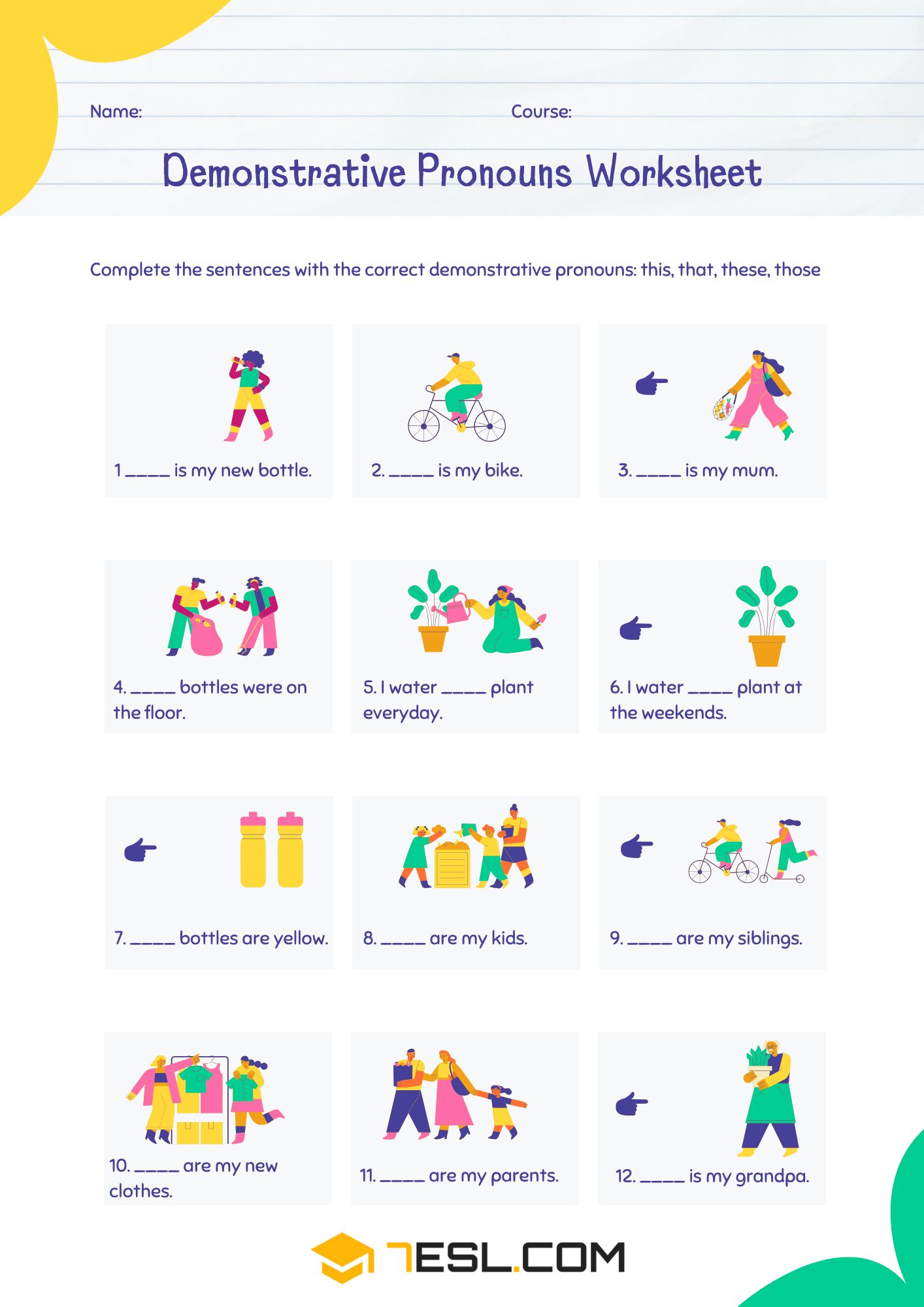
Activities to Complement the Worksheet
To further reinforce the concept of demonstrative pronouns, consider incorporating additional activities alongside the worksheet:
- Object Hunt: Ask children to find items in the room and describe them using demonstrative pronouns. For example, “Can you find something that is red? What would you call it?”
- Story Time: Read a story together and have children identify demonstrative pronouns as they hear them. You can pause and ask questions about specific words.
- Crafts: Create a simple craft where children label their creations using demonstrative pronouns. For instance, they could make a collage of pictures and label them with “this” or “that.”
Demonstrative Pronoun Worksheet For Preschool Gallery